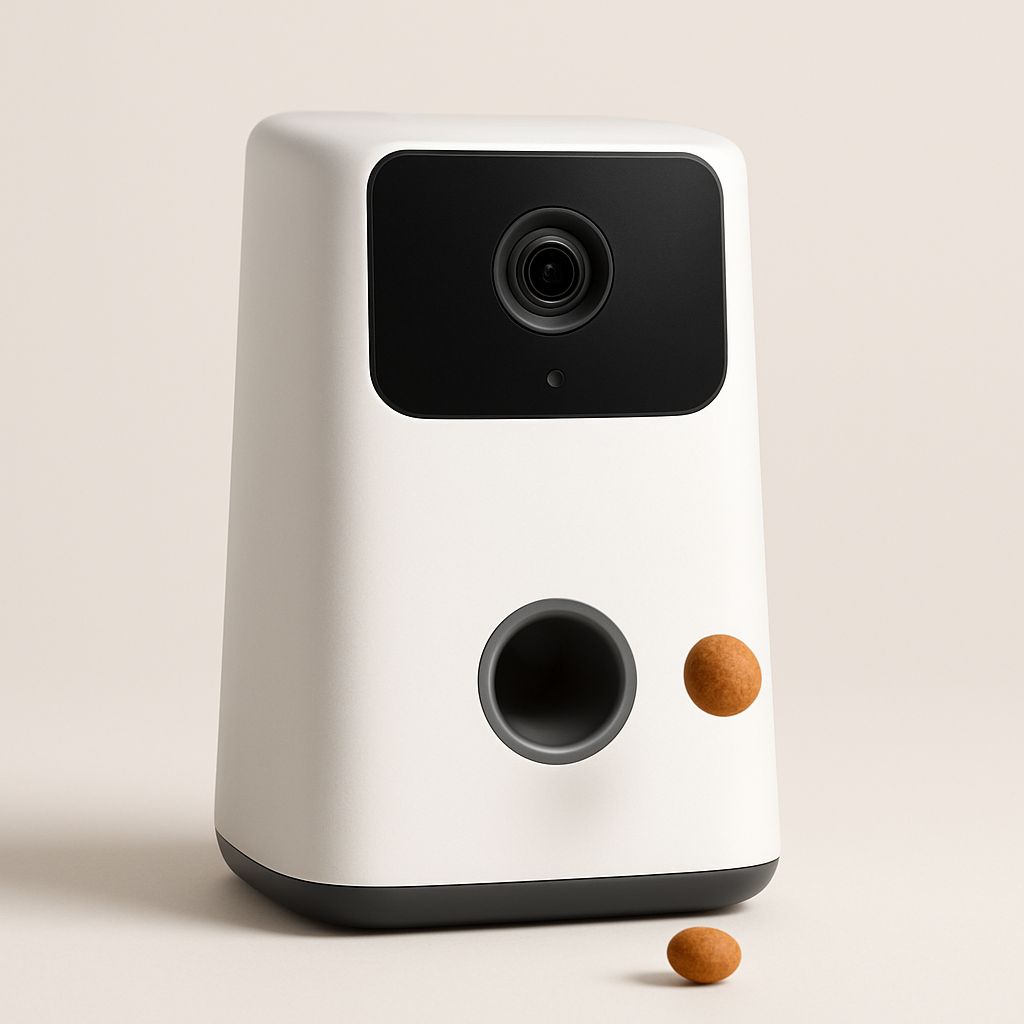
Treat-tossing cameras
Toss a treat from the app to reward calm behaviour while you are out. Works best with hard, round treats.
- App-controlled treats
- Two-way talk
- Bark alerts
Other searches
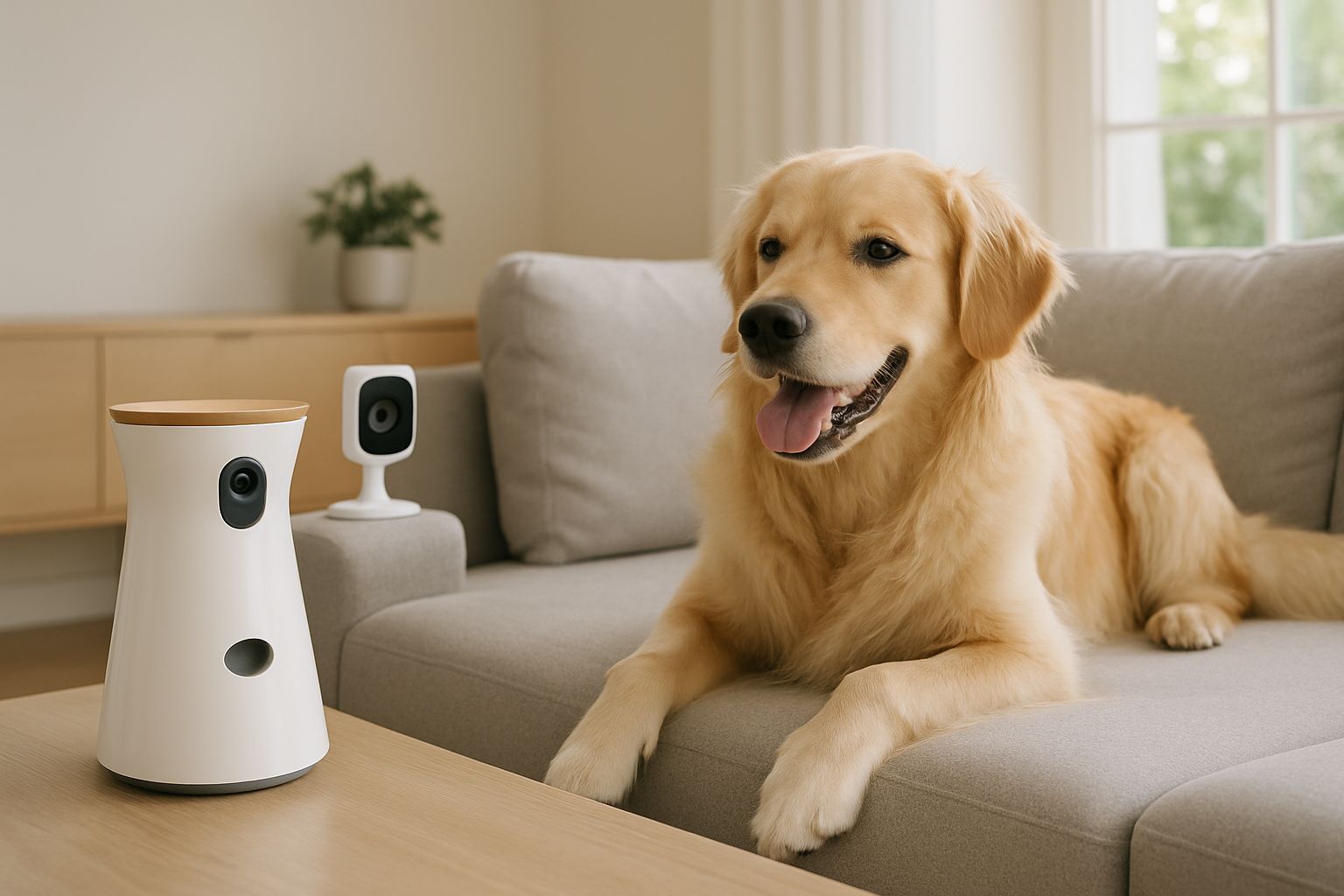
Watch, talk and toss treats while you are out
Pet cameras range from a plain indoor cam pointed at the sofa to treat-tossing robots with two-way audio. Decide first whether you want to watch or to interact: interaction features raise the price a lot, and dogs with separation anxiety often react badly to a disembodied voice.
Each pick links to a live Amazon search — prices and models stay current.
Toss a treat from the app to reward calm behaviour while you are out. Works best with hard, round treats.
Other searches
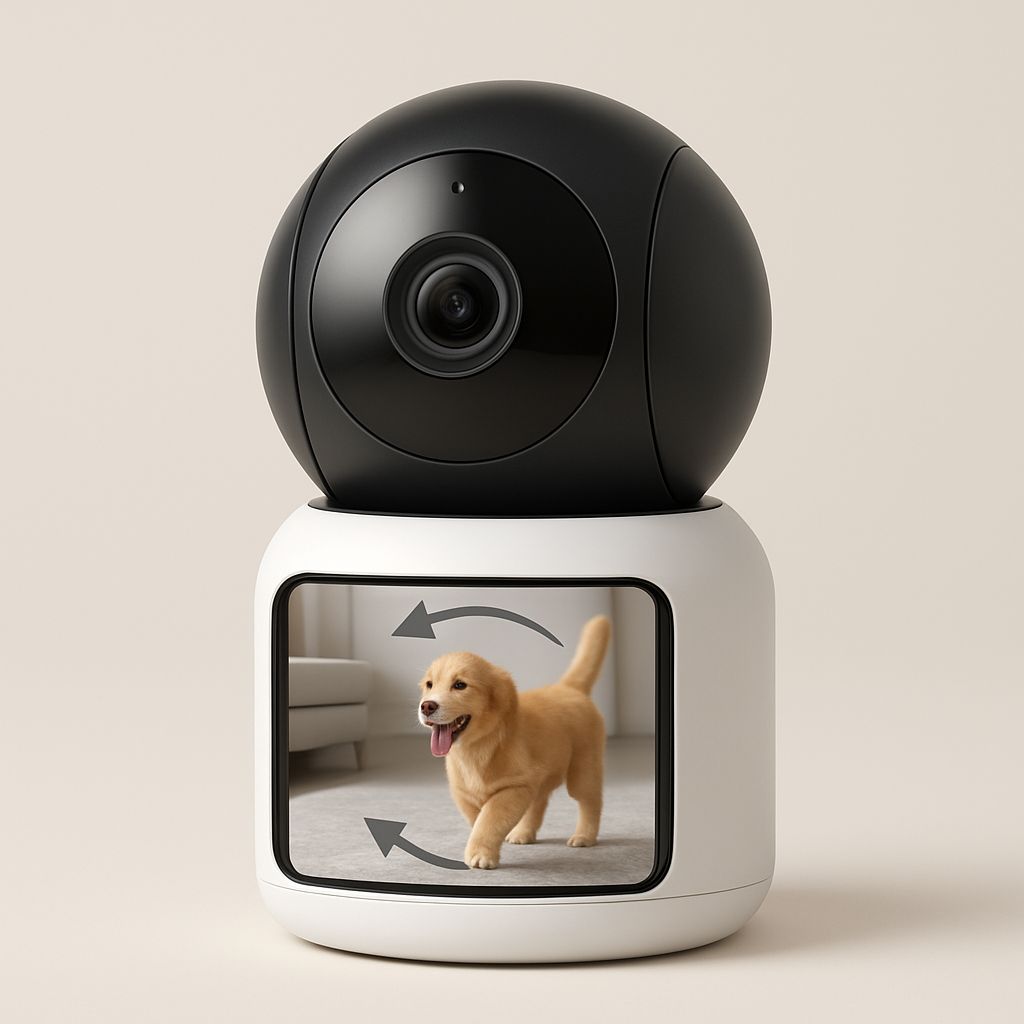
One camera covers a whole room; auto-tracking follows the pet instead of showing an empty rug.
Other searches
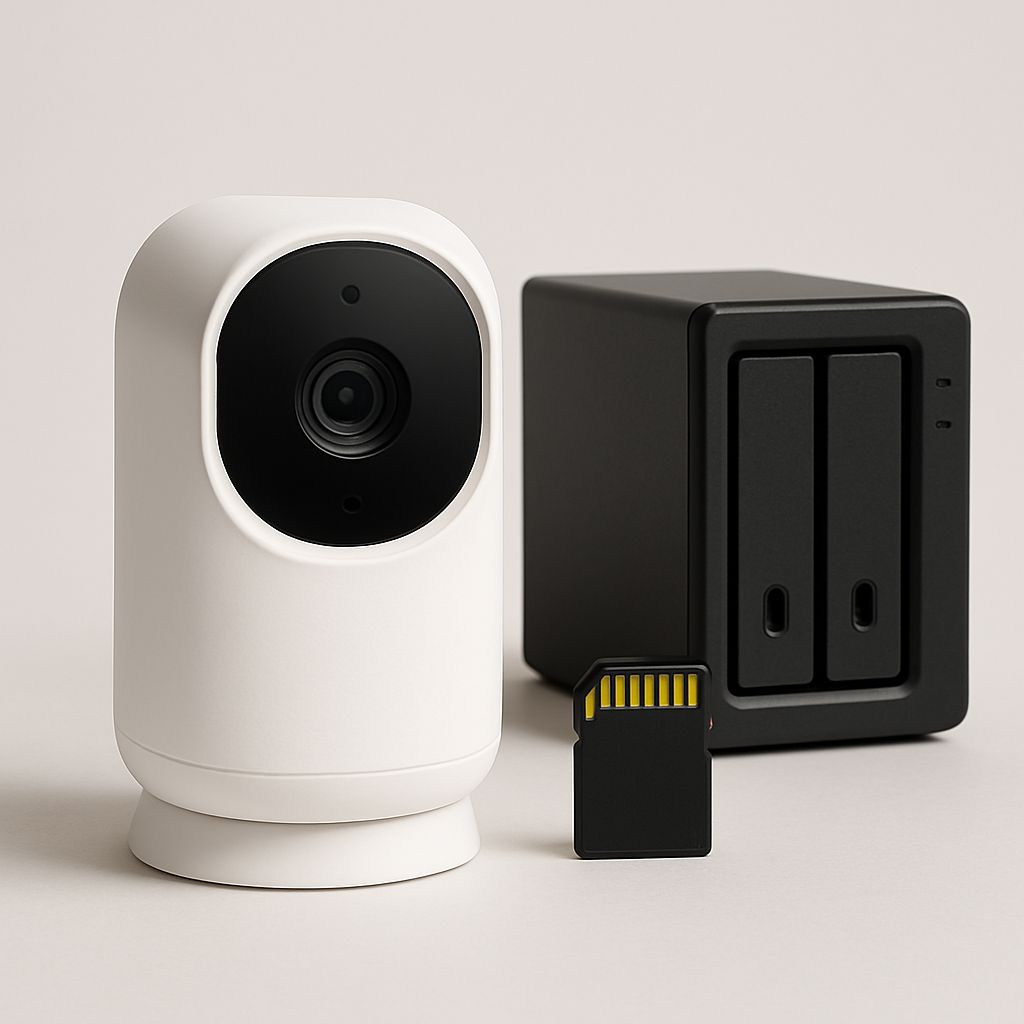
SD card or NAS recording avoids a monthly cloud fee and keeps footage of your home off someone else’s server.
Other searches
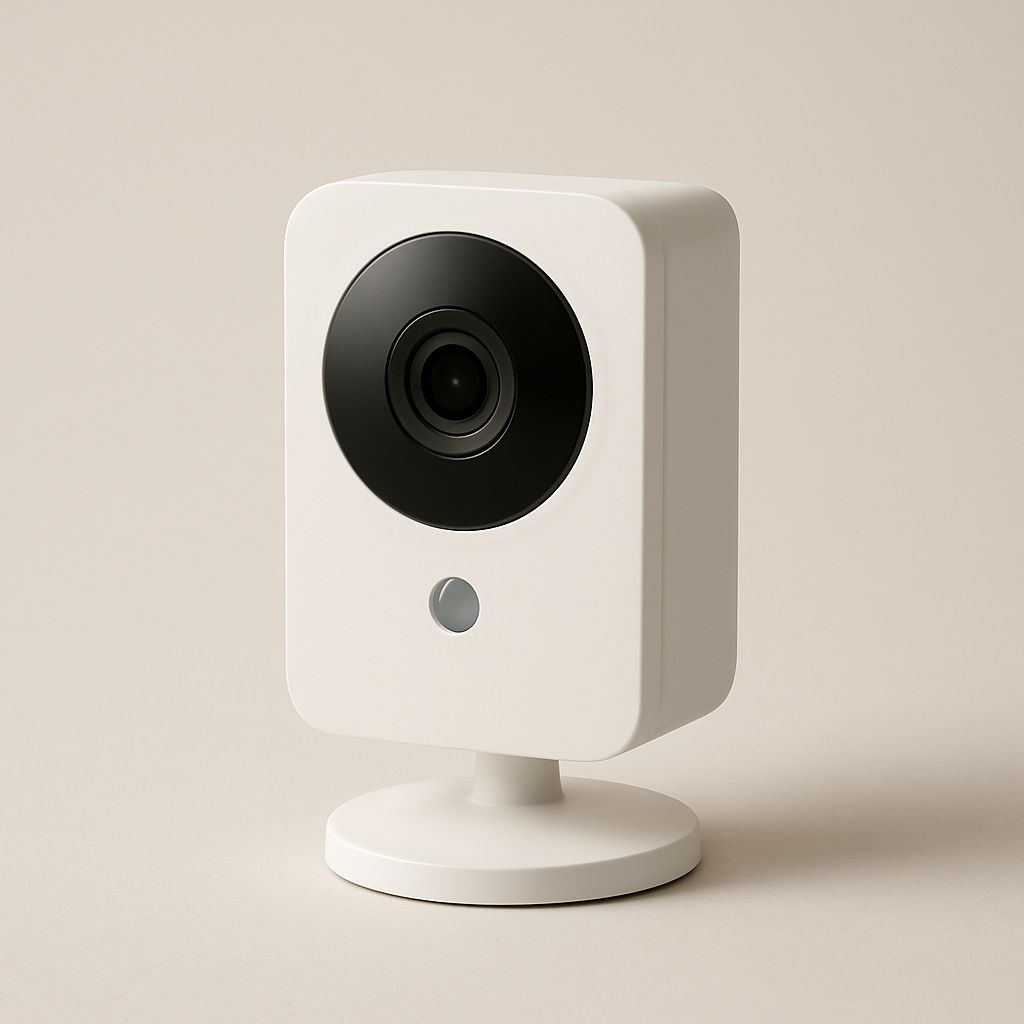
Sound detection pings your phone when barking starts, which is useful evidence for separation-anxiety training.
Other searches
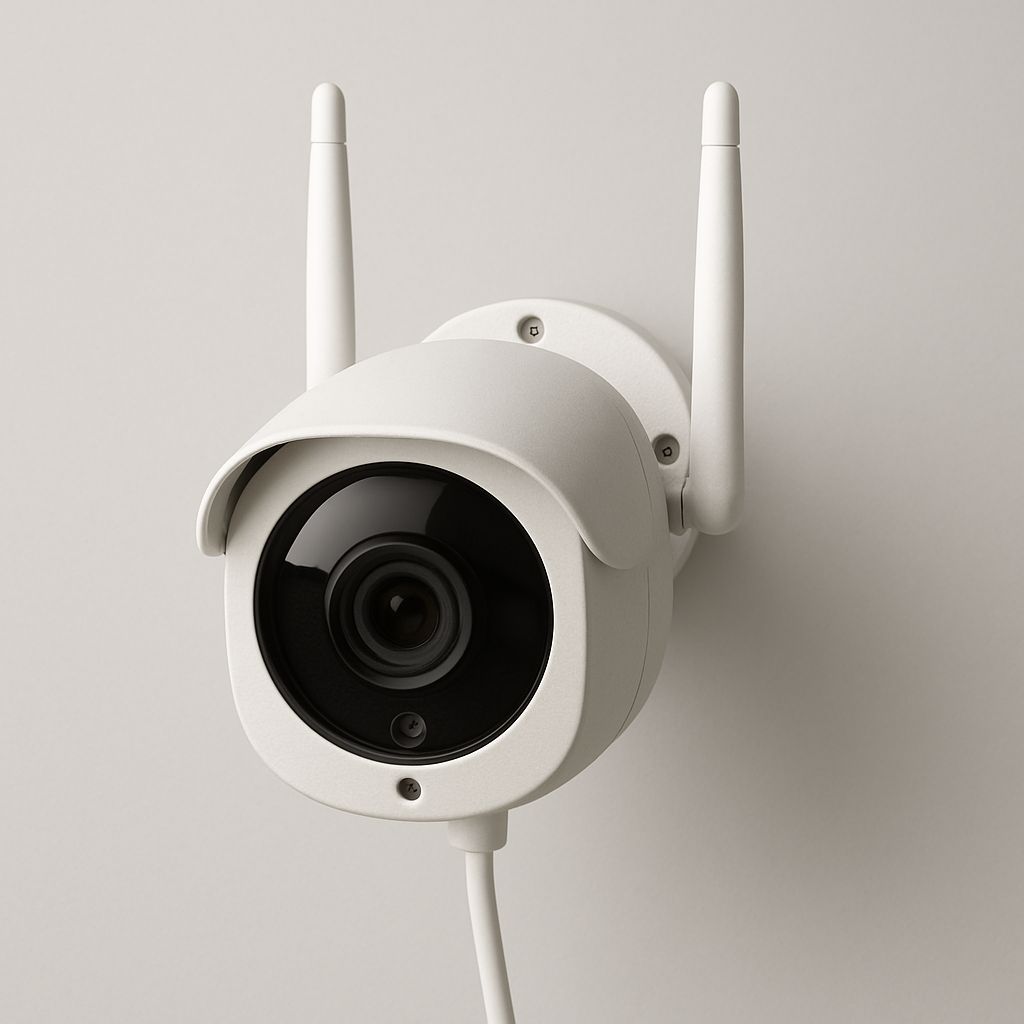
Weatherproof housings and wide angles for pets with garden access; look for a wired power option.
Other searches
A plain indoor camera answers the question “is everything fine?” for a fraction of the price of a treat-tossing robot. Decide which you actually need before you shop, because interaction is where the money goes.
Two-way audio deserves a warning. For a confident dog it is fun; for a dog with separation anxiety, hearing your voice with no body attached can make things worse. If you are treating anxiety, use the camera to gather evidence — when the barking starts, how long it lasts — rather than to talk your dog down.
A camera in your living room is a camera in your living room. Models with SD-card or NAS recording keep footage local and cost nothing monthly; cloud plans add convenience and a recurring fee, and put video of your home on someone else’s server.
Whatever you choose, change the default password, keep the firmware updated, and put the camera on a guest network if your router supports it. If the camera can be pointed at a bed or a desk, angle it at the pet zone only.
Not necessarily. Live view and alerts usually work for free; cloud video history is the part that is normally paid. Cameras with local SD or NAS recording avoid the fee entirely.
Standard infrared LEDs emit light that dogs and cats barely register, and most pets ignore them. If your camera has a visible white spotlight, turn it off at night — that one is noticeable.
It is if you use it for training: rewarding calm behaviour at the right second is genuinely useful. If it just becomes a snack machine, you are adding calories and an expensive gadget for no behavioural gain.
Yes, and it is one of the better uses. Bark and motion alerts tell you how long settling actually takes, which is far more reliable than guessing from the neighbour’s complaints.